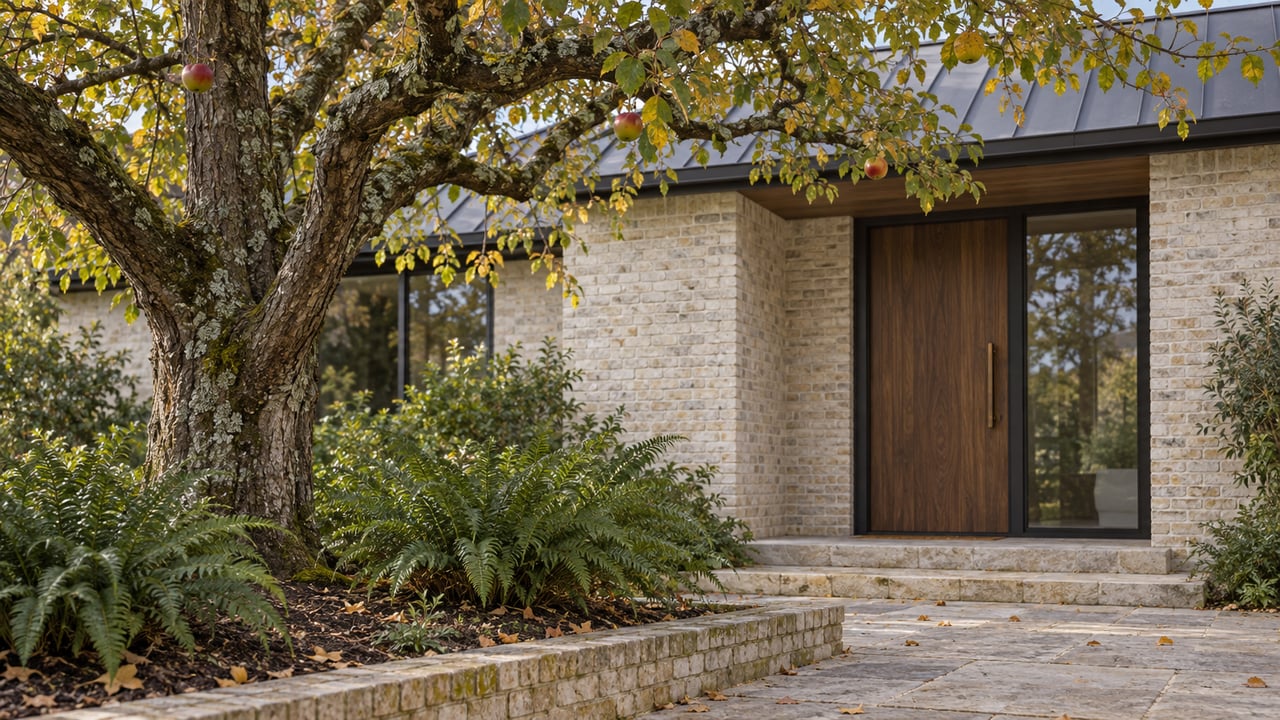
Clark County's Oldest Tree Died in 2020. It Turns 200 This October Anyway.
October 1, 2026
October 1, 2026
The tree that started Washington's apple industry has been dead for six years. Its trunk split from a hollowing crack, the cambium layer gave out, and by June 2020 what had stood in a small park off Columbia Way for nearly two centuries was gone. This October, Vancouver is throwing it a 200th birthday party.
That is not a contradiction so much as the actual story. What grows in Old Apple Tree Park today came up from the same root system as the tree Lieutenant Aemilius Simpson is said to have planted from a pocketful of London dessert-apple seeds in 1826. The roots never died. A sprout came up where the old trunk had stood, and the city's foresters, who had already spent years grafting cuttings and nursing suckers in anticipation of exactly this moment, kept it going. The 2026 festival on October 3 marks two centuries since the original planting, not two centuries of one continuous trunk. That distinction is most of what makes this worth knowing before you go.
The seeds came from a farewell dinner in London, tucked into Simpson's waistcoat pocket by a woman at the party who asked him to plant them wherever he ended up. He arrived at Fort Vancouver later that year and, along with Dr. John McLoughlin and Pierre C. Pambrun, put them in the ground just outside the fort. Genetic testing done years later found the fruit distantly related to the French Reinette, a variety with roots going back 500 years, which tracks with a seed carried across an ocean in someone's coat.
The tree that grew from those seeds produced a tart green apple used mostly for baking, not eating out of hand. It survived floods on the Columbia, the arrival of roads and rail lines, and a close call in the 1970s when a proposed widening of Interstate 5 would have taken it out entirely. State senators intervened, the freeway project got redesigned around it, and in 1984 the city built a small public park to protect it for good. It held on until 2020, at which point its root system did what the tree itself no longer could.
Offspring from that root system now grow in two places. One is back in the park where it always stood. The other is inside Fort Vancouver National Historic Site itself, where park rangers replanted nine suckers harvested directly from the tree and eight grafted trees in an orchard along the Land Bridge Trail in January 2021. If you want to see where the county's oldest continuous planting actually lives now, that orchard is it.
The Old Apple Tree Festival runs from 11 a.m. to 3 p.m. on October 3 at Old Apple Tree Park, 112 SE Columbia Way, inside the Fort Vancouver National Historic Site grounds. It's free. The City of Vancouver's event page confirms this year marks the 200-year mark since the original 1826 planting.
What actually happens there:
None of this requires advance tickets or planning much beyond showing up with apples if you want cider back. The National Park Service's writeup on the tree's history and its offspring orchard is worth a read if you want the fuller version before you go.
Vancouver's tree isn't the only place in the county where this particular thread runs unbroken. Out in Woodland, the Cedar Creek Grist Mill has been grinding grain and pressing cider since 1876, and it still does both the same way it always has: water-powered, no gas or electricity, with hand-cranked presses that visitors operate themselves.
The mill's annual Apple Cider Pressing lands on October 31 this year, starting at 9 a.m. Volunteers with the Friends of the Cedar Creek Grist Mill, the nonprofit that has kept the building running, press around 10,000 pounds of apples over the course of the day. Kids get put to work on the hand-cranked presses. If you play an instrument, there's a bluegrass jam on the back deck that runs alongside the pressing. Full details are on the mill's own events page.
The building itself is part of what makes the day worth the drive out. It's the only grist mill in Washington that has kept its original structural integrity and still mills with stone, powered entirely by the creek running underneath it. A covered bridge, rebuilt in 1994, crosses Cedar Creek right next to the mill and shows up in a lot of the fall photos people bring home from the visit.
The tree and the mill are the county's two oldest working touchpoints with apple season, but the same texture runs through the working farms that open for the fall regardless of how old anything on the property is.
Bi-Zi Farms in Vancouver runs a pumpkin patch and corn maze through October, with admission that includes a free pumpkin, a daytime corn maze, one hot drink, two turns on the pumpkin launchers, live bluegrass music, and fresh-pressed apple cider sampling on site.
Pomeroy Farm in Yacolt runs Pumpkin Lane, a mile-long drive lined with more than 100 hand-built pumpkin figures leading up to the farm's historic grounds. On October 9 and 23, the farm runs Pumpkin Lane After Dark, which adds food from Mosscrowe BBQ, a glass of wine, and s'mores to the usual drive-through.
Waltons Farms in Camas opens for the season on October 3, the same Saturday as the Old Apple Tree Festival across the county in Vancouver. Admission includes a corn maze and a barrel train ride, and the farm keeps goats and horses on the property that visitors are welcome to say hello to.
None of these farms are old in the way the tree or the mill are old. What they share with those two places is the same basic arrangement: an apple or pumpkin harvest that residents show up for every year, on a piece of land that's been doing this same work for a while, run by people who are still doing it by hand.
The county's fall calendar tends to get treated as a list of things to attend. What's actually happening is closer to a working relationship with the land that's been running in Clark County since before Washington was a state, and residents can still put their hands directly into it. You can press cider on a machine that's been doing that exact job since 1876. You can walk under an orchard grown from cuttings of a tree whose root system has now outlived its own trunk. You can drive a mile-long row of pumpkin figures at a farm that's been doing it for generations, or take home a cutting from a tree that started an entire state's apple industry two hundred years ago this month.
That's a different kind of fall than the version most towns get, where the seasonal stuff shows up as decoration and disappears by November. Here, the oldest parts of it are still working.
If walking those old orchard rows and working farms this fall has you thinking about what your own piece of Clark County is actually worth, Dawn Jensen-Beaudoin offers a free home valuation, no pressure, no obligation, just a straight answer from someone who knows this ground.
Stay up to date on the latest real estate trends.
Let’s build your future in Southwest Washington. Contact me today for a strategy session that goes deeper than the floorboards.