Your Vancouver Home's Decade Already Wrote Half the Inspection Report
September 17, 2026
September 17, 2026
There's a rusted pipe cap sticking out of a side yard in Arnada that nobody in the current household can explain. It isn't decorative. It's a vent line for a heating oil tank that hasn't held oil since before anyone living in the house was born.
That's the part sellers of older Vancouver homes tend to learn at the worst possible time: during a buyer's inspection, with a closing date already on the calendar. The house next door, built the same decade, might carry no tank exposure at all and instead be sitting on a clay sewer lateral that's been quietly filling with root mass for forty years. Two homes a block apart, two completely different problems, both predictable the moment you know what decade the pipes went in and which pocket of the city they're in.
Titan Inspection Services says Washington's standard seller disclosure form, used across the Vancouver area through NWMLS, asks directly whether you know of an underground heating oil tank on the property. And the legal exposure behind it is more permanent than most sellers assume: the current property owner is responsible for cleanup of any contamination from the tank regardless of who installed it or when it was last in use, and there's no statute of limitations that lets that liability expire with time.
If a pre-1970 Vancouver home converted from oil heat at some point, the odds of a tank still sitting in the ground go up considerably, whether or not anyone currently in the house has ever seen it. A standard home inspection won't find it. Locating a buried tank is a separate service from the inspection itself, and it's inexpensive relative to what it protects a seller from.
Once a tank is confirmed, most Washington fire districts follow the International Fire Code standard for closing a tank in place: remove all remaining oil and sludge, disconnect the fuel lines, and fill the tank with an inert solid material. Heno Sadhana's guide says the work must be carried out or supervised by a certified Underground Storage Tank Decommissioner. Costs for this kind of work in the region typically fall into a predictable range: an in-place closure with no contamination has run somewhere near $700 to $1,000, full removal without contamination somewhere between $5,000 and $10,000, and jobs that turn up contamination and require soil remediation starting around $10,000 to $15,000, with complex cases climbing well past $100,000.
Washington does offer a path for sellers who find themselves facing that upper range. The state's Heating Oil Loan and Grant Program, run through the Pollution Liability Insurance Agency, provides up to $75,000 in combined grant and loan funding for cleanup and tank replacement, including a cleanup grant component of up to $60,000. GrantExec says application cycles open twice a year, typically May through June and again in November through December. The spring 2026 cycle has already closed, so a seller working through this today is looking at the November window, which is worth building into your timeline if a tank turns up before you're ready to list.
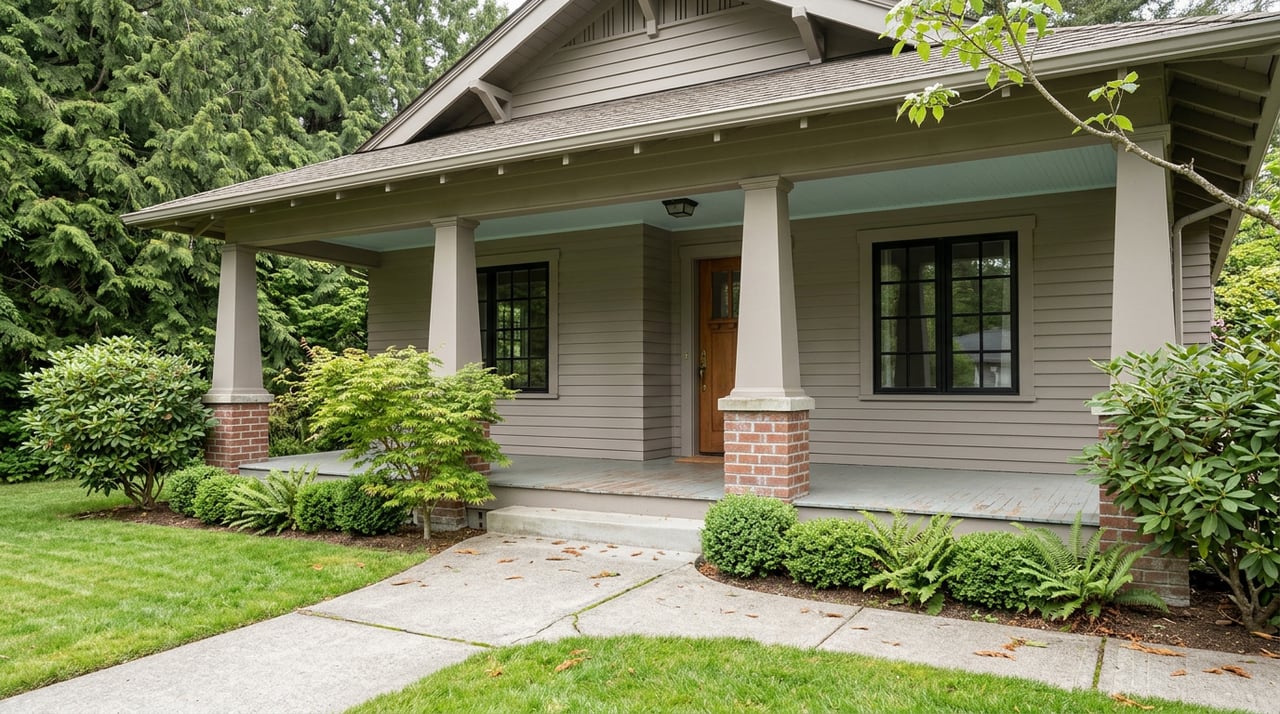
Vancouver's housing stock spans more than a century of construction, and each era left a different signature behind the walls. Local plumbing contractors who work across the city consistently describe the same pattern by neighborhood and build year.
| Vancouver pocket | What tends to turn up | Rough fix range |
|---|---|---|
| Arnada, Hough, Carter Park, and the streets around Officers Row | Original galvanized steel supply lines and, in Arnada specifically, original lead service lines; cast iron drain systems and clay sewer laterals 60 to 100 years old, prone to root intrusion | Repipe roughly $10,000 to $25,000; sewer scope strongly advised before listing |
| Minnehaha, Image, Lincoln, Cascade Park, Orchards, Fisher's Landing | Polybutylene (poly-B) supply pipe installed during the 1978 to 1995 window, prone to sudden failure with no warning | Full poly-B replacement roughly $10,000 to $20,000 |
| Salmon Creek, Felida, later-built Fisher's Landing | ABS and PVC drains hold up well, but original water heaters and disposals in the Salmon Creek and Fisher's Landing pockets are reaching end of life | Water heater and fixture replacement, lower cost tier |
The galvanized-line pattern in Arnada and Hough, along with the lead-line pattern in Arnada, reflects the simple fact that Arnada and Hough are among the oldest housing pockets in the city, built before modern supply materials existed. A century of corrosion narrows the interior of a three-quarter-inch galvanized line until it delivers less flow than a garden hose, and homeowners in these blocks often assume weak water pressure is just how an old house behaves. It isn't. It's a pipe system near the end of its functional life.
The poly-B pattern is a function of timing rather than location. Vancouver saw a wave of residential construction through the late 1970s and into the mid-1990s, exactly the window when polybutylene was marketed as an affordable alternative to copper. The material looks fine from the outside while chlorine in municipal water slowly degrades it from the inside, and it can split open without any warning sign. Homes in the Minnehaha, Image, and Lincoln pocket, along with much of Cascade Park, Orchards, and Fisher's Landing, fall squarely in that build window.
Here's the detail that surprises even sellers who think they've covered their bases: a standard home inspection does not include the sewer lateral, the underground pipe that carries wastewater from the house to the street connection. It's an especially good idea to have a separate sewer inspection when buying or selling an older home with cast iron or clay drain lines, since a high share of those older systems eventually develop root intrusion, bellies, or breaks that a walkthrough inspection has no way to catch.
Vancouver's mature tree canopy makes this more likely, not less. Roots are drawn to the moisture and nutrients inside a compromised pipe, and once they find a crack or a loose joint in an old clay or cast iron line, they keep growing until the pipe backs up or breaks apart from the inside. The yard shows nothing until the day it does.
A camera inspection of the lateral runs a small fraction of what an emergency excavation costs. One Vancouver plumbing contractor puts the math plainly: an annual camera inspection running around $200 routinely prevents a $5,000 emergency dig for homeowners with large trees near their line. For a seller, the same logic applies before listing rather than after an offer arrives. A pre-listing sewer scope gives you the option to fix a known problem on your own terms and timeline, price around it honestly, or walk into escrow with documentation instead of a surprise.
Knowing your home's era and pocket of the city turns a vague sense of "it's an old house, who knows" into a short, specific list of what's worth checking before a buyer's inspector does it for you.
None of this is about alarming a seller into unnecessary spending. It's about knowing which of these findings is likely before a buyer's inspector hands you the list with a closing date already on it. A tank you decommission on your own schedule is a line item. A tank a buyer's lender flags during underwriting is a renegotiation.
Does the disclosure form ask about tanks? Washington's disclosure form asks whether you know of an underground heating oil tank.
What if a previous owner told me it was already taken care of? Ask for the actual decommissioning paperwork rather than a verbal assurance.
Does a standard home inspection cover the sewer lateral or a buried tank? No. Both are separate, optional services. A standard inspection covers what an inspector can see and safely access, and neither the buried pipe under the yard nor a tank in the ground meets that description.
An old Vancouver house rewards the seller who knows its story before someone else tells it to them mid-transaction. If you're weighing whether to list a character home this year and want a straight read on what your specific address is likely to reveal, Dawn Jensen-Beaudoin will walk the property with you and help you decide what's worth fixing before a buyer's inspector finds it first. Get a free home valuation to start the conversation.
This article is general information, not legal, tax or financial advice. Consult a qualified professional about your situation.
Stay up to date on the latest real estate trends.

Let’s build your future in Southwest Washington. Contact me today for a strategy session that goes deeper than the floorboards.